



RESTA Training
The first step to sustainable resilience and psychological safety for your setting.
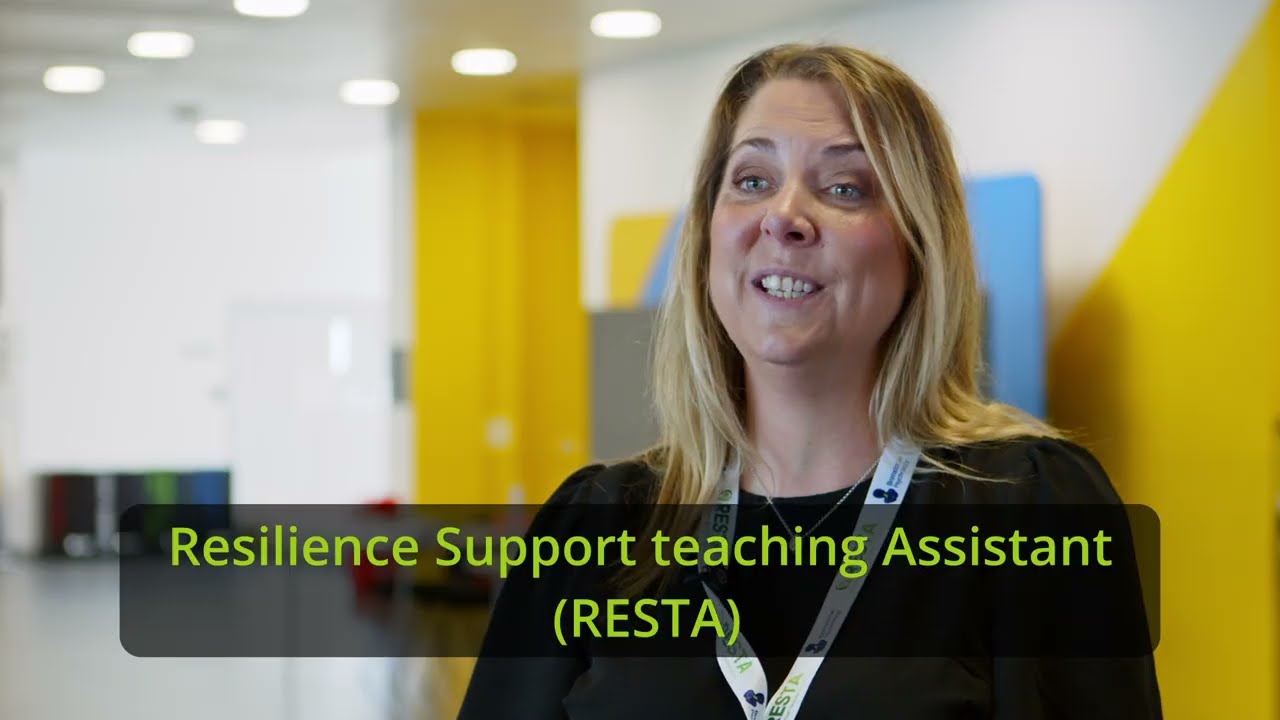
RESTAs (Resilience Support Teaching Assistants) undertake six days of training on psychological best practice, interventions and theory at the start of their practitioner journey.
Day 1 introduces the RESTA programme, its purpose, values and boundaries, and the role of the RESTA within educational settings. The focus is on understanding psychological safety as the foundation for all learning, wellbeing and change. RESTAs explore how trauma, stress and adversity can impact thinking, behaviour and relationships, and why safety, predictability and trust are essential before any reflective or skills-based work can take place.
This training day focuses on the importance of connection, belonging and relationships in supporting educational resilience. RESTAs explore how experiences of exclusion, loss or disrupted relationships can affect self-worth, engagement and behaviour. The day develops understanding of empathy, social awareness and social competence, and how RESTAs can support young people to build healthier connections with peers, adults and wider systems.
Day 3 explores emotions as meaningful signals rather than problems to be fixed. RESTAs develop an understanding of emotional systems, emotional literacy and regulation, and how emotions influence behaviour, decision-making and learning. The day also introduces reflective processes and values, helping RESTAs support young people to make sense of experiences, recognise what matters to them, and develop insight into their emotional and behavioural responses.
This day focuses on helping young people develop a clearer understanding of themselves, their experiences and their coping strategies. RESTAs explore how coping mechanisms develop in response to stress and adversity, and how some strategies may be protective in the short term but unhelpful over time. The training supports RESTAs to help young people build self-awareness, recognise patterns, and develop safer, more adaptive ways of coping.
Day 5 centres on motivation, hope and the ability to imagine a future. RESTAs explore how trauma, adversity and repeated failure can impact motivation, confidence and goal-setting. The day focuses on strengths, aspirations and agency, supporting young people to reconnect with learning, develop a sense of purpose, and begin to see themselves as capable of growth and positive change.
The final day focuses on the RESTA practitioner and the sustainability of the role. RESTAs develop key practitioner skills including reflective practice, boundaries, ethical working and self-care. The day emphasises supervision as an essential part of safe and effective practice, ensuring RESTAs are supported, grounded and able to deliver the programme consistently, confidently and in line with RESTA values.
Becoming a RESO (Resilience Support Organisation) is an ongoing process rather than a single training event. It involves embedding RESTA principles across the wider school or organisational culture, systems and relationships, so that psychologically informed practice becomes part of everyday working. Through continued reflection, supervision, collaboration and organisational development, RESOs strengthen consistency, sustainability and impact, ensuring that resilience-building approaches are shared, supported and lived across the whole setting.
Schools are supporting children and young people with increasingly complex emotional, behavioural and mental health needs, often without shared frameworks, time, or consistent psychological input.
Our work supports schools and colleges to build psychologically informed practice that is:
Evidence‑based
Practical and usable
Sustainable for staff as well as pupils
Rather than one‑off training, we offer a pathway that supports schools from shared understanding through to meaningful, long‑term impact.
More about RESTA
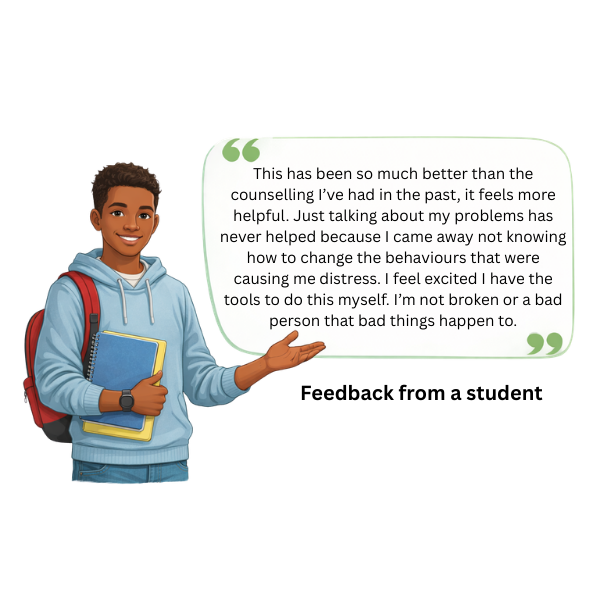
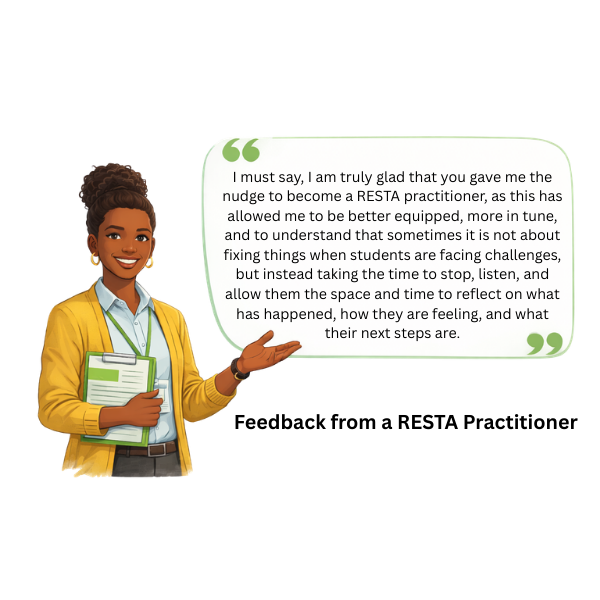
RESTA is an entirely unique training course, which provides practitioners with a range of bespoke tools to make a tangible difference to young people in their settings. Importantly, RESTA focuses on and has an established evidence base for helping young people to develop skills that last beyond their time in a setting, and remain with them for life.
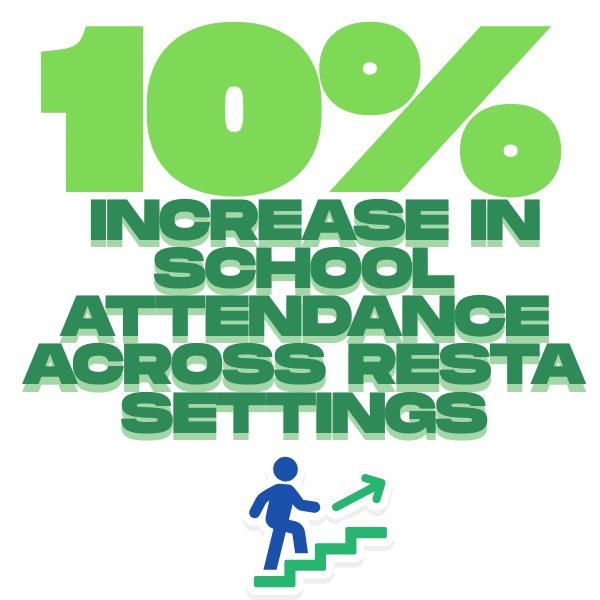
RESTA settings have reported substantial increases in attendance, student engagement and emotional resilience as a result of the programme.
Individual RESTA training includes:
- Six days of remote training with an Educational Psychologist or a Trainee Psychologist.
- Ongoing access to RESTA Resources.
- Ongoing support from the RESTA team.
- Complementary admission to the annual RESTA conference.
- Opportunities to participate in additional events and CPD.
- Heavily discounted ongoing supervision with an Educational Psychologist or Trainee Psychologist (currently £295 per year).
Teachers and Classroom Staff
Build confidence through Orientation and Integration.
Teaching Assistants
Deliver structured resilience support through RESTA.
SENCOs and Pastoral Leads
Develop shared frameworks that support inclusion.
School Leaders, MATs and Colleges
Embed sustainable, whole‑school approaches through RESO.
Training for individual RESTA practitioners starts at £1000, with with annual supervision and renewal of license costs £295 each year.
Training for RESOs (an two-day course for entire Resilience Support Organisation) starts at £2555.00.
RESTA – Resilience Support Teaching Assistants
A structured, evidence‑informed intervention model delivered by trained and supervised Teaching Assistants.
RESO – Resilience Support Organisation
A whole‑school framework embedding psychologically informed practice across culture, policy and staff wellbeing.