
Understand the layers that underpin RESTA’s strategic framework for building resilience within education. We support the development of environments where people feel secure, valued, and motivated to grow, both individually and collectively.
The Psychologically Informed Practice Pathway
A clear route from understanding to impact
Our pathway supports different roles and levels of readiness. These stages reflect depth of engagement, not tiers of provision.
Accessible online learning introducing:
– child and adolescent mental health
– behaviour as communication
– the impact of stress and adversity on learning
– psychologically informed thinking in schools
Format
15 short online videos (approximately 12 minutes each)
Purpose
To build shared language, confidence and understanding across teams.
In‑depth learning that helps schools move from understanding into aligned practice.
Focus areas include:
– regulation, stress and learning in everyday school life
– building protective capacity through relationships, routines and environments
– the role of emotionally available adults
– responding effectively to dysregulation
– shared RESTA frameworks to guide practice
Format
Two extended, evidence‑informed presentations with structured reflection prompts.
Purpose
To develop shared ways of thinking and working that improve consistency and support resilient school cultures.
At this stage, schools embed understanding into practice through structured pathways:
RESTA – Targeted resilience intervention delivered by trained Teaching Assistants
RESO – Whole‑school systems change for sustainable, psychologically informed practice
Most schools embed RESTA within a RESO‑informed framework.
1. Safety
Feeling secure and predictable. Safety is built through calm systems and consistent communication that help people feel grounded and able to focus.
2. Belonging
Feeling valued and connected. Belonging grows through trust, inclusion, and relationships that make individuals feel part of something larger
3. Reflection
Making sense of experience. Reflection enables insight, learning, and emotional regulation, allowing people to adapt and grow.
4. Autonomy
Having voice and agency. Autonomy fosters confidence, motivation, and problem-solving by empowering individuals to take ownership of their work.
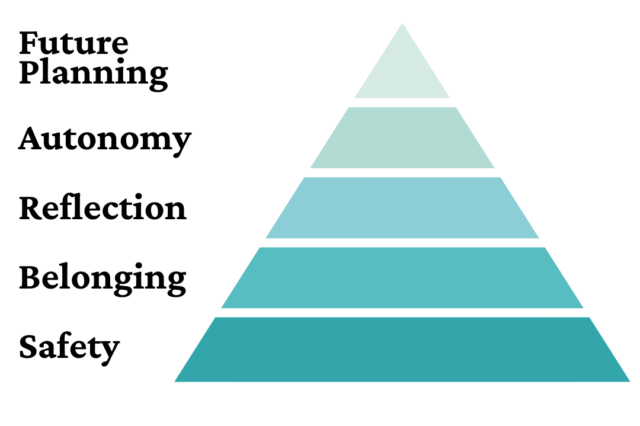
5.Future Planning
Having direction and hope. Future planning creates a sense of growth, aspiration, and contribution by connecting today’s actions to tomorrow’s goals.
Two Pathways, One Purpose
RESTA
For Education
RESTA trains school-based staff to become Resilience Support Teaching Assistants (RESTAs).
They deliver structured wellbeing and motivation programmes for young people who need help reconnecting with learning and belonging.
✅ 6-day training ✅ Psychologist supervision ✅ Measured impact
RESTA C
For Organisations
RESTA(C) applies the same psychology in workplaces, especially in safety-critical and high-pressure industries.
We help teams build cultures of calm, connection, and accountability through our Two Hands of Leadership and RESTA Ops Quality Mark.
✅ Leadership & culture programmes ✅ ESG & social-value reporting ✅ Sponsor-a-School partnerships
Why RESTA Works
Because resilience isn’t taught, it’s built into the systems we live and work in.
RESTA doesn’t fix people; it transforms environments.
Our framework helps organisations and educators create the conditions where resilience can grow through Safety, Belonging, Reflection, Autonomy, and Future Planning.
By addressing the root causes of burnout and stress, RESTA strengthens the systems that underpin wellbeing and performance. This doesn’t just improve life for those working and learning within education, it also builds more sustainable, profitable organisations.
When people feel safe, valued, and motivated, they think clearer, collaborate better, and stay longer, creating healthier workplaces, stronger teams, and better outcomes for everyone.
Shared Social Impact
When organisations partner with RESTA, they don’t just invest in workplace resilience, they help build it in the next generation.
Every partnership funds the training of a RESTA practitioner in a local school, extending the benefits of psychological safety, belonging, and wellbeing beyond the workplace.
Together, we’re creating a ripple of resilience, from boardrooms to classrooms. Shaping cultures that care, lead, and last.